
By Stainless Steel Jewelry Wholesale | 03 July 2026
The Science of Sensitive Skin: Building a Reputable Brand with Hypoallergenic Stainless Steel Wholes
The Science of Sensitive Skin: Building a Reputable Brand with Hypoallergenic Stainless Steel Wholesale
In the e-commerce and retail jewelry sector, customer trust is a fragile commodity. A single product line that triggers skin irritation can result in an influx of returns, negative online reviews, and long-term brand damage. For modern consumer groups, "hypoallergenic" is no longer a luxury buzzword—it is a baseline product requirement.
Sourcing hypoallergenic stainless steel jewelry wholesale offers an optimal balance of commercial scalability and product safety. However, effectively scaling this niche requires a technical understanding of metal stability, global compliance regulations, and manufacturing transparency.
Understanding the Paradox: Total Content vs. Leaching RatesA common misconception among jewelry retailers is that hypoallergenic steel must be entirely "nickel-free."
From a metallurgical perspective, this is incorrect. Premium jewelry-grade stainless steels naturally contain between 10% and 14% nickel. The determining factor for skin safety is not the total volume of nickel inside the alloy, but rather its nickel release rate (how much nickel leaches out of the metal and into the skin when exposed to human sweat).
In low-quality fashion jewelry alloys, weak atomic structures allow nickel ions to migrate freely to the surface, triggering allergic contact dermatitis in sensitive wearers.
Conversely, premium marine-grade and surgical-grade stainless steels feature a highly stable molecular matrix. The nickel atoms remain permanently locked within an austenitic crystal structure, shielded by a self-healing passive surface layer of chromium oxide.
Technical Benchmarks: Vetting 316L and Global Safety StandardsTo ensure your wholesale inventory is genuinely safe for sensitive skin, your sourcing criteria must align with internationally recognized scientific protocols rather than unverified supplier claims.
1. The Global Regulatory Baseline: EU REACH & EN 1811The European Union’s REACH Annex XVII (standardized through the EN 1811 test method) sets the strictest regulatory benchmark for international jewelry trade. It dictates that items in prolonged, direct contact with the skin must release no more than 0.5 micrograms ($\mu\text{g}$) of nickel per square centimeter per week ($\mu\text{g}/\text{cm}^2/\text{week}$). For initial piercings, that limit drops to $0.2\ \mu\text{g}/\text{cm}^2/\text{week}$.
2. The 316L Release Performance
Peer-reviewed metallurgical studies consistently demonstrate how various steel grades perform under standardized artificial sweat testing:
While 316L contains a slightly higher raw percentage of nickel than 304, its added molybdenum content (2% to 3%) exponentially increases its pitting and corrosion resistance. This ultra-stable defense system restricts actual nickel migration to a mere $0.02\ \mu\text{g}/\text{cm}^2/\text{week}$—well below the global safety ceiling.
Verifying Supplier Integrity: Beyond the Catalog
When buying factory-direct, particularly from major overseas manufacturing hubs, retail brands must protect their supply chains by requesting legitimate verification.
Demand Independent Lab Certifications: Reliable B2B suppliers will willingly provide batch-tested Material Technology Data Sheets (MTDS) or third-party compliance certificates from global verification bodies like SGS, BV, or Intertek.
Beware Banned Alloys: Ensure your supplier explicitly guarantees that they do not use sulfur-resulfurized grades like 201 stainless steel for components. While 201is highly favored by factories because it is easy to machine quickly, its high sulfur content destroys its corrosion resistance, leading to high nickel leaching and frequent skin reactions.
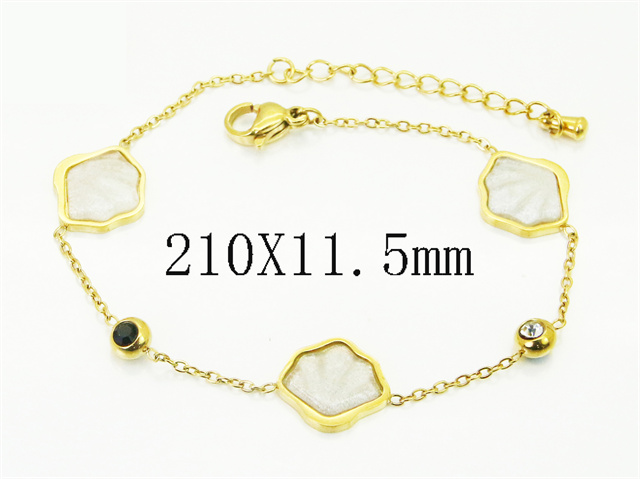
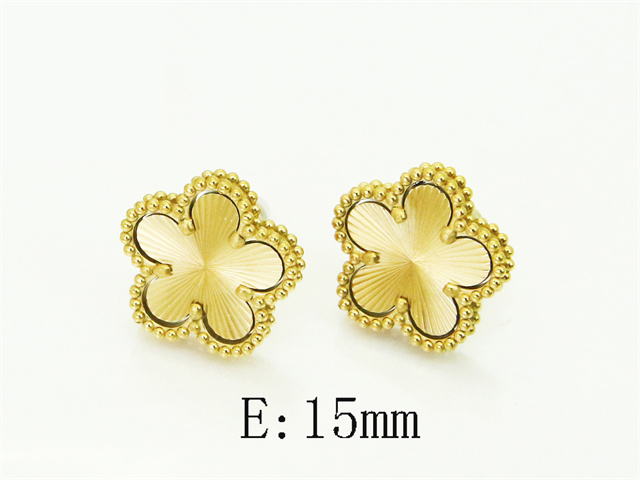
Confirm PVD Plating Parameters: If your brand includes gold collections, verify that your supplier applies gold tones via Physical Vapor Deposition (PVD) inside a vacuum chamber rather than traditional chemical electroplating.
PVD molecularly fuses the gold layer into the 316L base, creating a dense barrier that preserves both color and hypoallergenic integrity over years of wear.
Anchoring your inventory strictly to verified 316L stainless steel manufactured under strict EN 1811 compliance parameters removes liability from your business. It allows you to confidently offer a "safe for sensitive skin" product line that drives high customer lifetime value, protects margins, and builds long-term brand equity.
www.stainlesssteeljewelrywholesale.com
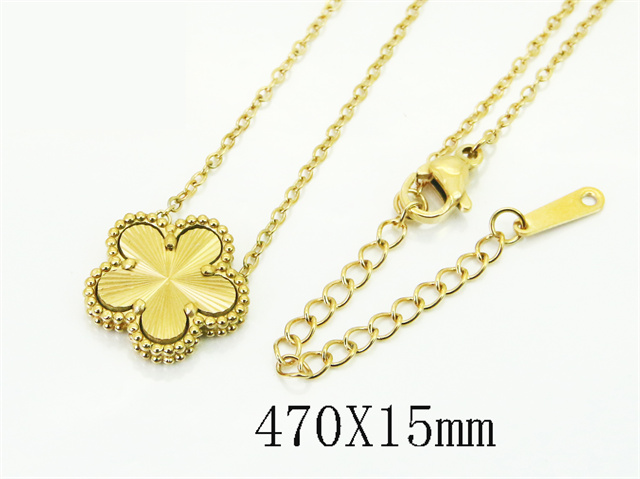
In the e-commerce and retail jewelry sector, customer trust is a fragile commodity. A single product line that triggers skin irritation can result in an influx of returns, negative online reviews, and long-term brand damage. For modern consumer groups, "hypoallergenic" is no longer a luxury buzzword—it is a baseline product requirement.
Sourcing hypoallergenic stainless steel jewelry wholesale offers an optimal balance of commercial scalability and product safety. However, effectively scaling this niche requires a technical understanding of metal stability, global compliance regulations, and manufacturing transparency.
Understanding the Paradox: Total Content vs. Leaching RatesA common misconception among jewelry retailers is that hypoallergenic steel must be entirely "nickel-free."
From a metallurgical perspective, this is incorrect. Premium jewelry-grade stainless steels naturally contain between 10% and 14% nickel. The determining factor for skin safety is not the total volume of nickel inside the alloy, but rather its nickel release rate (how much nickel leaches out of the metal and into the skin when exposed to human sweat).
In low-quality fashion jewelry alloys, weak atomic structures allow nickel ions to migrate freely to the surface, triggering allergic contact dermatitis in sensitive wearers.
Conversely, premium marine-grade and surgical-grade stainless steels feature a highly stable molecular matrix. The nickel atoms remain permanently locked within an austenitic crystal structure, shielded by a self-healing passive surface layer of chromium oxide.
Technical Benchmarks: Vetting 316L and Global Safety StandardsTo ensure your wholesale inventory is genuinely safe for sensitive skin, your sourcing criteria must align with internationally recognized scientific protocols rather than unverified supplier claims.
1. The Global Regulatory Baseline: EU REACH & EN 1811The European Union’s REACH Annex XVII (standardized through the EN 1811 test method) sets the strictest regulatory benchmark for international jewelry trade. It dictates that items in prolonged, direct contact with the skin must release no more than 0.5 micrograms ($\mu\text{g}$) of nickel per square centimeter per week ($\mu\text{g}/\text{cm}^2/\text{week}$). For initial piercings, that limit drops to $0.2\ \mu\text{g}/\text{cm}^2/\text{week}$.
2. The 316L Release Performance
Peer-reviewed metallurgical studies consistently demonstrate how various steel grades perform under standardized artificial sweat testing:
While 316L contains a slightly higher raw percentage of nickel than 304, its added molybdenum content (2% to 3%) exponentially increases its pitting and corrosion resistance. This ultra-stable defense system restricts actual nickel migration to a mere $0.02\ \mu\text{g}/\text{cm}^2/\text{week}$—well below the global safety ceiling.
Verifying Supplier Integrity: Beyond the Catalog
When buying factory-direct, particularly from major overseas manufacturing hubs, retail brands must protect their supply chains by requesting legitimate verification.
Demand Independent Lab Certifications: Reliable B2B suppliers will willingly provide batch-tested Material Technology Data Sheets (MTDS) or third-party compliance certificates from global verification bodies like SGS, BV, or Intertek.
Beware Banned Alloys: Ensure your supplier explicitly guarantees that they do not use sulfur-resulfurized grades like 201 stainless steel for components. While 201is highly favored by factories because it is easy to machine quickly, its high sulfur content destroys its corrosion resistance, leading to high nickel leaching and frequent skin reactions.
Confirm PVD Plating Parameters: If your brand includes gold collections, verify that your supplier applies gold tones via Physical Vapor Deposition (PVD) inside a vacuum chamber rather than traditional chemical electroplating.
PVD molecularly fuses the gold layer into the 316L base, creating a dense barrier that preserves both color and hypoallergenic integrity over years of wear.
Anchoring your inventory strictly to verified 316L stainless steel manufactured under strict EN 1811 compliance parameters removes liability from your business. It allows you to confidently offer a "safe for sensitive skin" product line that drives high customer lifetime value, protects margins, and builds long-term brand equity.
www.stainlesssteeljewelrywholesale.com
