
By Stainless Steel Jewelry Wholesale | 23 July 2026
Partnering with a 316L Stainless Steel Jewelry Manufacturer: A B2B Audit Guide
In the modern fashion accessory industry, consumer expectations have shifted toward low-maintenance, activewear-compatible lines.
Today’s shoppers expect accessories to be completely tarnish-free, waterproof, and hypoallergenic. For jewelry brands, boutique chains, and e-commerce enterprises, partnering with the right 316L stainless steel jewelry manufacturer is a critical supply chain decision.
1. Metallurgical Verification: Guaranteeing 316L
In B2B manufacturing, accepting broad claims like "surgical steel" without chemical verification introduces significant risk. Low-cost factories frequently substitute commercial-grade 201 steel to reduce raw material costs. A reputable manufacturing partner must guarantee authentic 316L stainless steel.
The "L" in 316L indicates low carbon content (less than 0.03%), which prevents micro-cracks and intergranular corrosion during precision laser cutting, stamping, and welding. Crucially, 316L contains an essential 2% to 3% addition of molybdenum.
This specific element increases the alloy's resistance to localized pitting and corrosion caused by human sweat, chlorinated pool water, and ocean salinity.
Hypoallergenic Compliance: Premium 316L locks trace nickel atoms within a passive chromium oxide surface layer. This prevents nickel leaching from reaching the skin, easily passing the strict EN 1811 nickel release test required under EU REACH regulations.
Independent Certification: Always mandate that your manufacturing partner supply up-to-date, batch-tested Material Technology Data Sheets (MTDS) verified by third-party testing labs like SGS, Intertek, or Bureau Veritas.
2. Technical Capabilities: Precision Casting and PVD Plating
A top-tier 316L manufacturer must possess advanced technical facilities to execute complex industrial designs without sacrificing product quality.
CNC Machining & Lost-Wax Casting
Unlike soft metals such as brass or silver, 316L steel is extremely tough, sitting at roughly 5 to 6 on the Mohs scale. Manufacturing complex geometric rings, heavy Cuban links, or intricate pendants requires high-precision CNC (Computer Numerical Control) equipment and multi-cavity lost-wax investment casting. Look for facilities with in-house tooling workshops to ensure swift ODM/OEM prototyping.
High-Vacuum PVD Plating
For gold, rose gold, or black finishes, avoid factories relying on traditional chemical electroplating, which leaves a thin surface layer that easily rubs off. Premium manufacturers operate dedicated Physical Vapor Deposition (PVD) vacuum coating chambers.
In a high-temperature vacuum chamber, real 14k or 18k gold is vaporized into a high-energy plasma and molecularly fused to the 316L base. This produces an exceptionally dense, wear-resistant finish that allows your brand to back its collection with a solid waterproof guarantee.
Prioritize manufacturers that offer integrated fiber-laser engraving services, allowing you to add brand logos, custom text, or "316L" quality hallmarks directly onto clasps, inner ring bands, or tags.
By partnering with a transparent 316L manufacturer specializing in verified PVD coating and maintaining strict QA workflows, your enterprise can secure a reliable, high-margin product line engineered for long-term commercial growth.
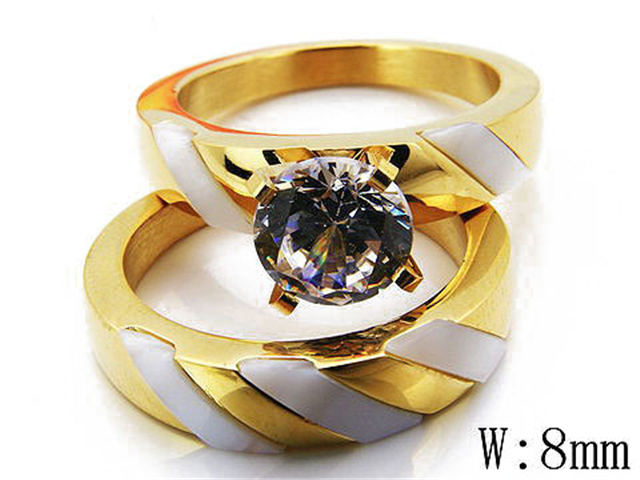
Today’s shoppers expect accessories to be completely tarnish-free, waterproof, and hypoallergenic. For jewelry brands, boutique chains, and e-commerce enterprises, partnering with the right 316L stainless steel jewelry manufacturer is a critical supply chain decision.
1. Metallurgical Verification: Guaranteeing 316L
In B2B manufacturing, accepting broad claims like "surgical steel" without chemical verification introduces significant risk. Low-cost factories frequently substitute commercial-grade 201 steel to reduce raw material costs. A reputable manufacturing partner must guarantee authentic 316L stainless steel.
The "L" in 316L indicates low carbon content (less than 0.03%), which prevents micro-cracks and intergranular corrosion during precision laser cutting, stamping, and welding. Crucially, 316L contains an essential 2% to 3% addition of molybdenum.
This specific element increases the alloy's resistance to localized pitting and corrosion caused by human sweat, chlorinated pool water, and ocean salinity.
Hypoallergenic Compliance: Premium 316L locks trace nickel atoms within a passive chromium oxide surface layer. This prevents nickel leaching from reaching the skin, easily passing the strict EN 1811 nickel release test required under EU REACH regulations.
Independent Certification: Always mandate that your manufacturing partner supply up-to-date, batch-tested Material Technology Data Sheets (MTDS) verified by third-party testing labs like SGS, Intertek, or Bureau Veritas.
2. Technical Capabilities: Precision Casting and PVD Plating
A top-tier 316L manufacturer must possess advanced technical facilities to execute complex industrial designs without sacrificing product quality.
CNC Machining & Lost-Wax Casting
Unlike soft metals such as brass or silver, 316L steel is extremely tough, sitting at roughly 5 to 6 on the Mohs scale. Manufacturing complex geometric rings, heavy Cuban links, or intricate pendants requires high-precision CNC (Computer Numerical Control) equipment and multi-cavity lost-wax investment casting. Look for facilities with in-house tooling workshops to ensure swift ODM/OEM prototyping.
High-Vacuum PVD Plating
For gold, rose gold, or black finishes, avoid factories relying on traditional chemical electroplating, which leaves a thin surface layer that easily rubs off. Premium manufacturers operate dedicated Physical Vapor Deposition (PVD) vacuum coating chambers.
In a high-temperature vacuum chamber, real 14k or 18k gold is vaporized into a high-energy plasma and molecularly fused to the 316L base. This produces an exceptionally dense, wear-resistant finish that allows your brand to back its collection with a solid waterproof guarantee.
Prioritize manufacturers that offer integrated fiber-laser engraving services, allowing you to add brand logos, custom text, or "316L" quality hallmarks directly onto clasps, inner ring bands, or tags.
By partnering with a transparent 316L manufacturer specializing in verified PVD coating and maintaining strict QA workflows, your enterprise can secure a reliable, high-margin product line engineered for long-term commercial growth.
